
Industry News · Oct 17, 2026
How Is a Power Transformer Manufactured?
How is a power transformer manufactured? Explore the main production stages, from silicon steel core cutting and winding assembly to insulation, tank fabrication, vacuum oil filling, and final testing. Learn how manufacturing precision and quality control contribute to reliable transformer performance.
Industry News
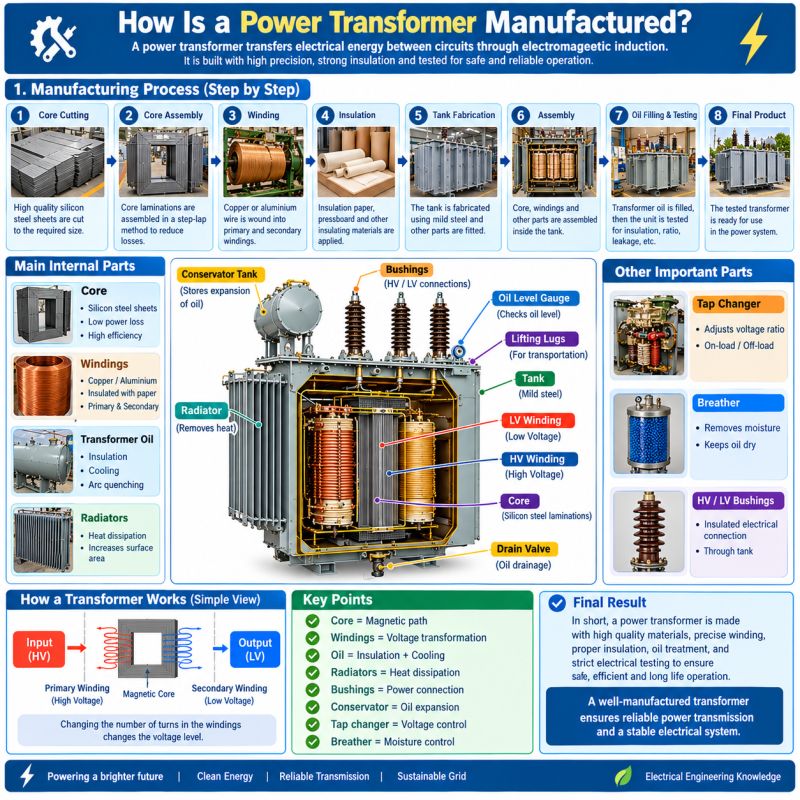
How Is a Power Transformer Manufactured? A Step-by-Step Guide Power transformers are essential components of modern electrical transmission and distribution systems. They transfer electrical energy between circuits through electromagnetic induction, enabling electricity to be delivered at the appropriate voltage level. But how is a power transformer actually manufactured? Behind every finished transformer is a series of carefully controlled processes involving electrical steel, winding conductors, insulation materials, mechanical fabrication, oil treatment, assembly, and testing. At Xuzhou Zhongtie Electric, transformer manufacturing combines material preparation, component assembly, and quality control to support the production of oil-immersed and dry-type transformers. 1. The Power Transformer Manufacturing Process Although the exact production sequence varies according to transformer type, capacity, voltage level, and design, an oil-immersed power transformer typically passes through the following stages. Step 1: Core Cutting The process begins with electrical-grade silicon steel sheets. The sheets are cut to the required dimensions and shapes according to the transformer core design. Accurate cutting helps control core geometry and supports efficient magnetic performance. Step 2: Core Assembly The silicon steel laminations are carefully stacked and assembled to form the magnetic core. Precise alignment and appropriate joint construction help reduce magnetic losses, excitation current, vibration, and noise. Step 3: Winding Copper or aluminum conductors are wound to form the primary and secondary windings. The number of turns, conductor dimensions, winding arrangement, and insulation system are determined by the transformer's electrical design and rated operating conditions. Step 4: Insulation Insulating paper, pressboard, and other suitable materials are applied to the windings and other required areas. The insulation system provides electrical separation between conductors and between energized components and grounded structures. Proper insulation design is essential for dielectric strength and long-term reliability. Step 5: Tank Fabrication The transformer tank and associated structural components are fabricated according to the design requirements. This stage may include sheet metal cutting, welding, surface preparation, and protective coating. Radiators, mounting structures, and other external components are prepared as required. For oil-immersed transformers, tank integrity is particularly important for oil containment and safe operation. Step 6: Active Part Assembly The core and windings are assembled into the transformer active part. The assembly process includes positioning the windings, establishing electrical connections, installing insulation structures, and checking the required clearances. The active part is then installed inside the transformer tank, together with the components specified in the design. Step 7: Oil Treatment, Filling, and Testing For oil-immersed transformers, insulating oil is treated as required to meet the specified moisture and dielectric performance requirements. Depending on the transformer design and manufacturing procedure, vacuum drying and vacuum oil filling may be used to reduce moisture and trapped air in the insulation system. The transformer is then prepared for inspection and testing. Typical tests are selected according to the applicable standards and project specifications. Step 8: Final Inspection and Delivery Before shipment, the completed transformer undergoes final inspection, documentation review, and the required factory tests. Depending on the design and applicable requirements, testing may include winding resistance measurement, voltage ratio and phase displacement verification, insulation-related tests, no-load loss and current measurement, load loss and impedance measurement, and dielectric tests. After the required checks are completed and accepted, the transformer is prepared for packaging and delivery. 2. Main Components of a Power Transformer A power transformer consists of interconnected electrical, mechanical, thermal, and protection components. Core: Provides the magnetic path for electromagnetic induction. Windings: Transfer electrical energy between circuits through electromagnetic coupling. Insulation system: Maintains electrical separation and withstands operating stresses. Transformer tank: Houses and protects the active part in an oil-immersed design. Transformer oil: Provides electrical insulation and transfers heat away from the active part. Radiators and cooling equipment: Dissipate heat generated during operation. Bushings: Provide insulated electrical connections between the windings and the external network. Tap changer: Adjusts the voltage ratio within the designed range, depending on the tap changer configuration. Protection and monitoring devices: Help detect abnormal operating conditions and support safe operation. The selection and configuration of these components depend on the transformer's capacity, voltage level, cooling method, installation environment, and application. 3. Why Manufacturing Quality Matters Transformer performance is influenced by more than its rated capacity and voltage. Every manufacturing stage contributes to the final product. Core manufacturing: Affects magnetic performance, no-load losses, and operating noise. Winding production: Influences electrical performance and mechanical strength. Insulation and drying: Help maintain dielectric reliability and reduce moisture-related risks. Tank fabrication: Supports structural integrity and oil containment. Oil treatment: Helps achieve the required insulating properties. Factory testing: Verifies specified performance characteristics and identifies potential defects before delivery. Consistent process control and appropriate testing are essential for producing transformers that meet technical requirements and operate reliably in service. 4. Oil-Immersed vs. Dry-Type Transformer Manufacturing Oil-immersed and dry-type transformers share some manufacturing stages, including core production, winding, insulation, assembly, and testing. However, their construction and final processing differ. The active part is installed in a tank containing insulating oil. Manufacturing involves oil containment, oil treatment and filling, cooling arrangements, and the installation of components such as bushings and conservators when required. Dry-type transformers use solid insulation systems rather than an insulating oil-filled tank. Depending on the design, they may use cast-resin windings or other dry insulation arrangements. Their manufacturing processes focus on winding construction, insulation performance, thermal management, enclosure requirements, and the applicable electrical tests. The appropriate transformer type depends on project specifications, installation conditions, safety requirements, maintenance considerations, and operating environment. 5. Transformer Standards and Quality Assurance For international power projects, transformer manufacturing and testing should follow the applicable technical standards and contractual specifications. The IEC 60076 series is widely used for power transformer requirements and testing. Specific requirements depend on the transformer type, voltage level, rating, and applicable parts of the standard. For EPC contractors, utilities, and equipment procurement teams, reviewing technical specifications, factory test reports, quality documentation, and delivery requirements is an important part of supplier evaluation. Conclusion Power transformer manufacturing is a coordinated process that combines electrical design, precision manufacturing, insulation technology, mechanical fabrication, and quality testing. From cutting silicon steel laminations to final factory inspection, every stage contributes to the performance and reliability of the finished transformer. At Xuzhou Zhongtie Electric, we manufacture three-phase oil-immersed and dry-type transformers for power distribution and electrical infrastructure applications. Looking for a transformer manufacturer for your next project? Share your required capacity, primary and secondary voltages, transformer type, quantity, installation country, and applicable standards with our team to discuss your project requirements.
Need product selection support, drawings review, or a BOQ quotation?
Submit RFQ